Beautiful Plants For Your Interior

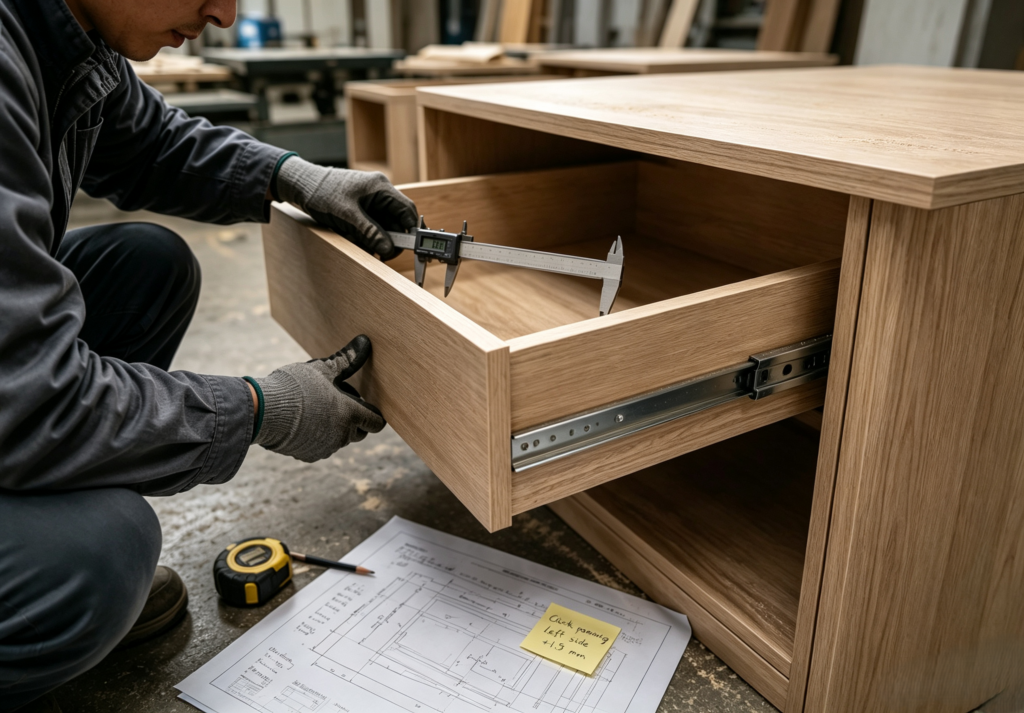
Cabinet hardware is often blamed when drawers or hinges stop performing as expected.
When a drawer doesn’t close smoothly or a hinge suddenly feels different, the first reaction is often the same:
The hardware must be defective.
It’s an understandable assumption. Hardware is the moving part of a cabinet, making it the most visible component when something goes wrong.
However, experienced manufacturers and installers know that visible symptoms and root causes are not always the same thing.
In many cases, cabinet construction, installation accuracy, loading conditions, or long-term use have a greater impact on hardware performance than the hardware itself.
Understanding the difference between a genuine manufacturing defect and an installation-related issue can help reduce unnecessary replacements, lower service costs, and solve problems more efficiently.
Cabinet hardware is often evaluated as an individual product, but in reality, it never works alone.
A hinge relies on accurate door dimensions and correct drilling positions.
A drawer slide depends on cabinet squareness, proper installation, and parallel alignment.
Soft-close mechanisms perform best when operating within their designed load range and installation tolerances.
Because every component interacts with the others, changes elsewhere in the cabinet system often appear first as hardware performance issues.
This is one reason why replacing hardware doesn’t always solve the problem.
Although both can produce similar symptoms, they originate from different causes.
A manufacturing defect is a problem introduced during the production of the hardware itself.
Examples include:
These problems generally remain consistent regardless of where the hardware is installed.
Installation issues occur when otherwise functional hardware operates under unsuitable conditions.
Common examples include:
Although the symptoms may resemble defective hardware, the root cause lies elsewhere in the cabinet system.
Before assuming hardware has failed, it’s worth performing a few simple inspections.
Even minor deviations in cabinet squareness can increase friction and affect drawer movement.
Confirm that drawer slides, hinges, and mounting plates have been installed according to the manufacturer’s specifications.
Furniture often carries heavier loads over time than originally anticipated. Excessive weight can influence long-term hardware performance.
If identical hardware performs normally on other cabinets, the issue may be isolated to cabinet construction or installation rather than the hardware itself.
Humidity, floor settlement, or structural movement may gradually alter cabinet alignment after installation.
Replacing hardware without identifying the actual cause may temporarily eliminate the symptom while leaving the underlying issue unresolved.
A structured troubleshooting process helps manufacturers and installers:
Experienced technical teams often spend more time understanding why a problem occurred than deciding which part to replace.
That investment usually saves significantly more time and cost in the long run.
When cabinet hardware performance changes, a systematic approach is often the most effective.
A typical process includes:
This method improves diagnostic accuracy while reducing unnecessary part replacement.
Yes. Soft-close systems are designed to operate within specific installation tolerances. Cabinet distortion or installation inaccuracies may reduce their effectiveness even when the hardware itself is functioning correctly.
Manufacturing defects typically remain consistent across different installations and are often confirmed through inspection, testing, or repeated performance issues within the same production batch.
Not necessarily. Installation accuracy, cabinet dimensions, loading conditions, and environmental factors should be evaluated before concluding that the hardware is defective.
Cabinet hardware is one of the most visible parts of any cabinet system, but it is rarely the only factor influencing performance.
The next time a drawer slide, hinge, or soft-close mechanism doesn’t perform as expected, resist the temptation to assume the hardware is at fault.
Instead, step back and evaluate the entire system.
In many cases, identifying the real cause takes a little longer than replacing a component—but it leads to a more reliable solution, lower maintenance costs, and better long-term performance.
When troubleshooting cabinet hardware, remember this simple principle:
The first visible symptom is not always the root cause.
You may like:
Can Stainless Steel Cabinet Hinges Rust? What Really Determines Corrosion Resistance